BPC-157 dosage for dogs: a weight chart would invent certainty
Dogs appear in a pharmacokinetic paper. That is a study of where the peptide goes, not an established treatment plan for a pet.
The dog in the paper was there for a different question
A search for BPC-157 dosage for dogs, or a BPC-157 dog dosage chart by weight, can make the next step look like arithmetic. The 2022 rat and beagle-dog study does not supply that chart. It measured pharmacokinetics: how the body takes up, distributes, breaks down and clears a substance.
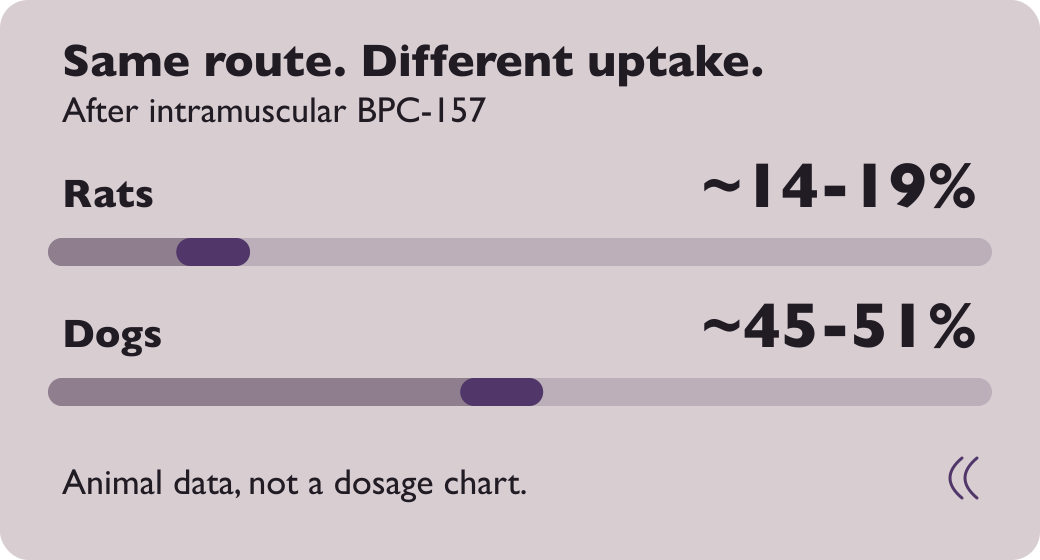
The prototype peptide had an elimination half-life of less than 30 minutes in the animal work. After intramuscular administration, reported bioavailability was about 14-19% in rats and 45-51% in dogs. Bioavailability is the fraction reaching the circulation.
The species difference undermines, for me, the easy conversion story. The dog data do not establish an effective dose for an injured pet, a safe course of use or a weight-based veterinary prescription.
Same route, different uptake
The rat and dog pharmacokinetic results are worth comparing side by side because the difference is easy to overlook in a paragraph. The peptide was rapidly broken into smaller fragments and entered amino-acid metabolism, with excretion through urine and bile.
Short residence in the blood does not establish how long a biological effect lasts. It also does not supply a dosing interval. The paper's measurements concern laboratory animals; they cannot settle human timing or turn into a dog's treatment schedule.
Per rat and per kilogram are not interchangeable
The 2003 Achilles experiment describes 10 microg, 10 ng or 10 pg per rat, administered intraperitoneally once daily, with local administration also tested. Those are the source's study amounts and route. They are not dog doses or human recommendations.
Other rodent research expresses amounts by body weight, commonly around 10 microg/kg and 10 ng/kg. The gastric-ulcer experiment used 400 ng/kg and 800 ng/kg in rats. A per-rat amount and a per-kilogram amount describe different denominators; stripping them away changes the experiment.
My answer to the chart query stops here. Neither rat amounts nor pharmacokinetic measurements establish a validated BPC-157 dosage chart for dogs.
The human pilots are not a missing conversion table
The infusion pilot and bladder pilot used different routes for different questions. Their study amounts are recorded on the human research page. They do not establish a general therapeutic dose or duration.
The 2025 review describes the missing controlled human evidence. Formal human oral pharmacokinetics are not established, and neither a safe length of use nor discontinuation effects have been characterized.
Laboratory handling and reconstitution describe experimental preparation. They supply no validation for home treatment. A pet's illness requires veterinary assessment; a laboratory weight calculation cannot stand in for it. I would distrust such a calculation even if it fit neatly in a table.